

Frozen Shoulder Relief in Austin That Actually Moves the Joint
Adhesive capsulitis stiffens the shoulder capsule and limits motion. We treat it intensively with mobilization, trigger-point work, Sacral Occipital Technique, laser, and microcurrent so the shoulder can move again.
If your shoulder has locked up and simple movements hurt…
Reaching overhead, fastening a seatbelt, or sleeping on your side becomes a project. Frozen shoulder (adhesive capsulitis) is more than tight muscles—the capsule around the joint itself becomes inflamed and stiff. It can start after an injury, after surgery, or for no clear reason at all. One pattern we see often is in post-menopausal women, where estrogen and hormonal shifts contribute. In those cases, coordinating with a functional medicine practitioner or endocrinologist for hormonal support alongside the physical work usually produces better results.
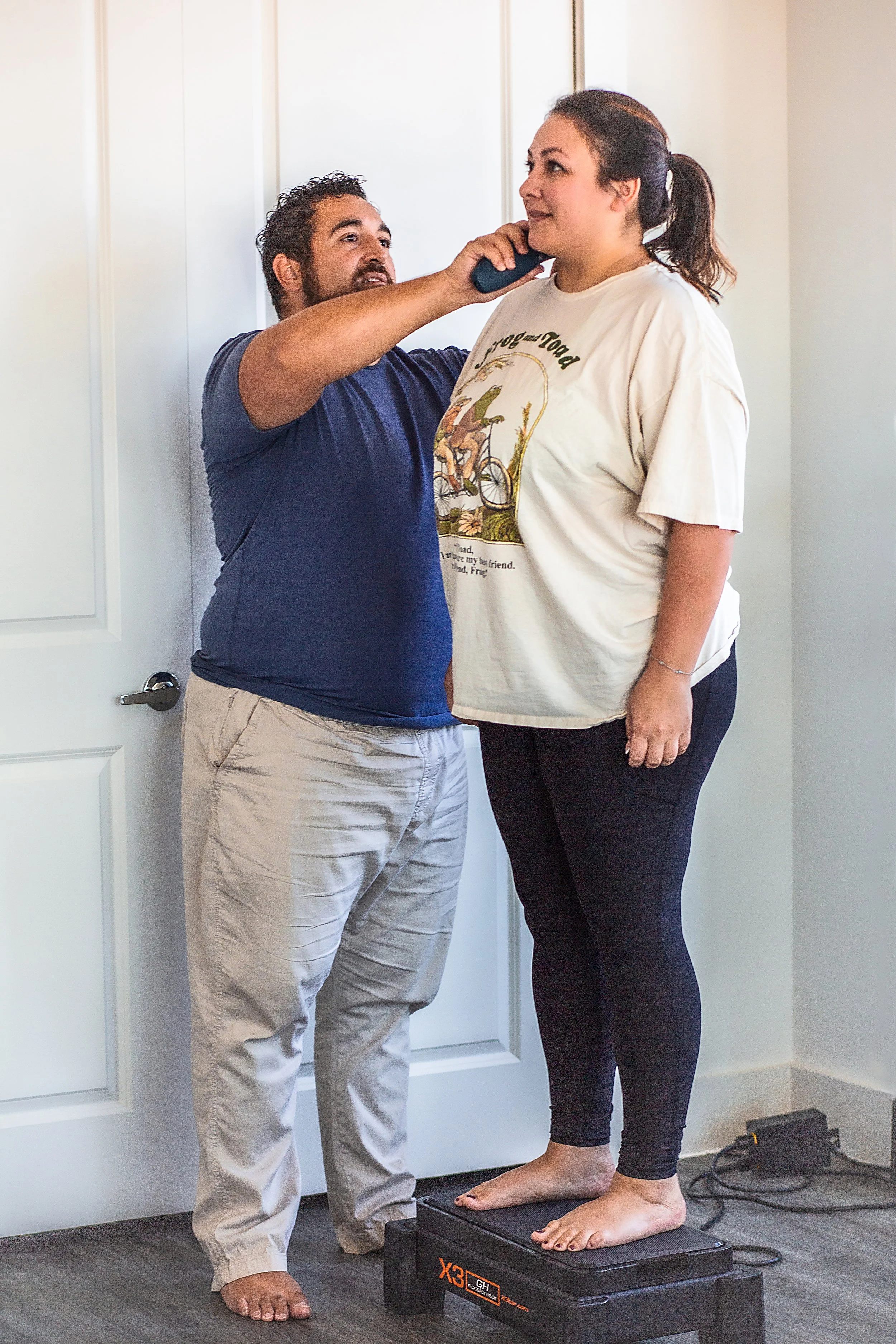
What frozen shoulder actually is
The shoulder capsule thickens, inflames, and loses its normal flexibility. The result is pain and a progressive loss of range of motion—sometimes severe enough that the arm feels stuck. Causes vary widely; the common thread is capsule restriction that needs to be addressed directly rather than just stretched gently.
Do adjustments help frozen shoulder?
Yes. Chiropractic manipulation (used alongside the mobilization and soft-tissue work) greatly accelerates recovery for most people. It is not absolutely required, but it is highly beneficial and something I recommend as part of the plan.
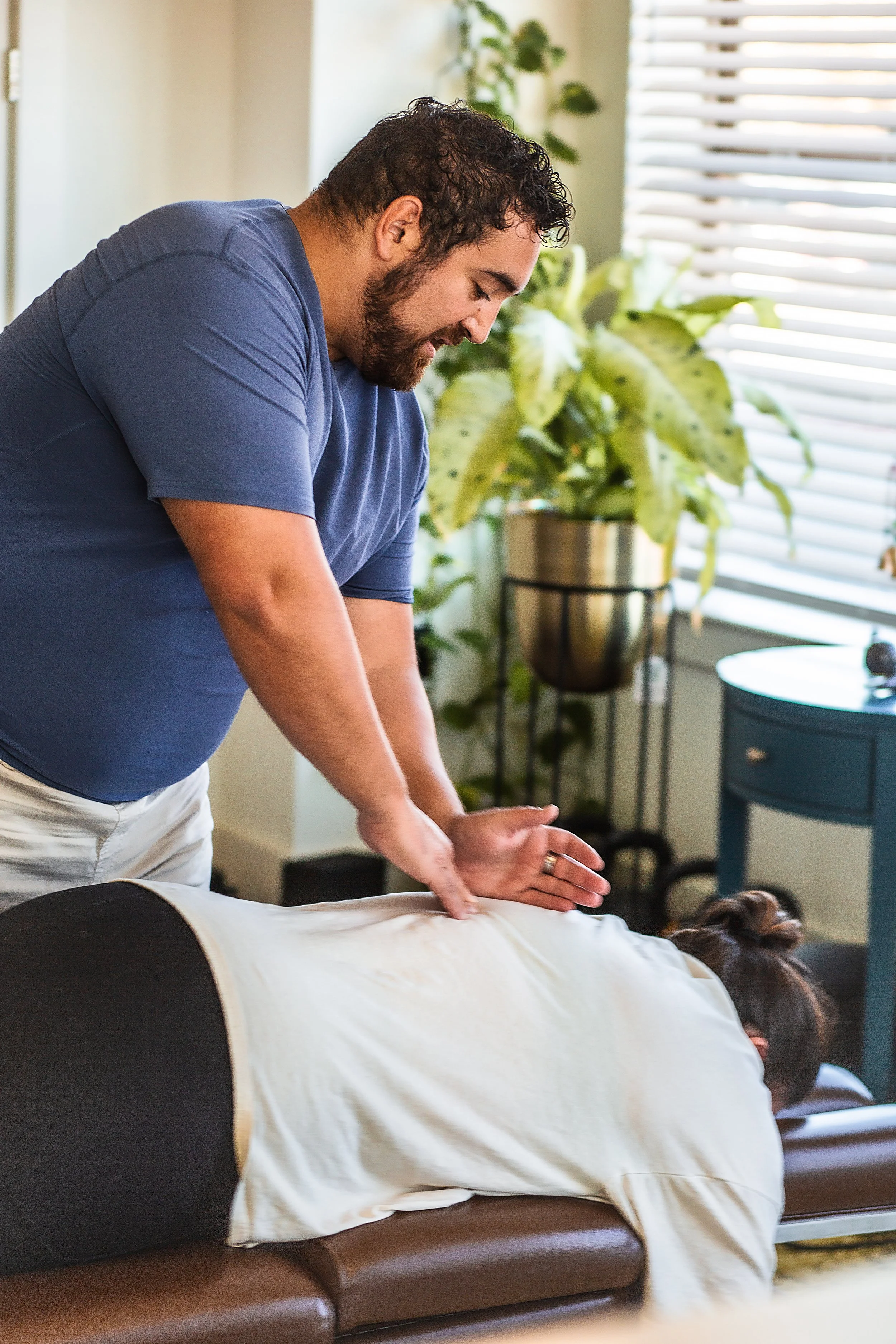
How we treat Frozen Shoulder at Frequency Chiropractic
This is one of the conditions I treat most intensively. The work is aggressive because that is what moves the capsule. It is uncomfortable in the moment, but it is also what produces results. So far in my practice, every patient who has completed the process has recovered full or near-full function.
Treatment typically includes:
Intense joint mobilization and deep tissue/trigger-point work focused on the capsule and surrounding muscles
Sacral Occipital Technique (SOT) adjustments and myofascial therapy through the whole body to address compensatory patterns
Microcurrent frequencies and laser therapy to reduce inflammation and speed tissue recovery
A very specific, structured home exercise program that you do between visits
Many other approaches stay local and conservative. Here we combine the aggressive local work with full-body SOT and frequency therapies. I also frequently recommend coordinating with an acupuncturist—it is not required, but it often shortens the overall timeline.
What the timeline usually looks like
The longer the shoulder has been frozen, the longer recovery generally takes.
If you come in soon after the stiffness begins, aggressive treatment can resolve it relatively quickly.
If it has already been several weeks or months, recovery time is often roughly equal to the length of time you have had the restriction.
Starting earlier almost always shortens the process. We map a clear plan after the first visit based on how long it has been present and how restricted the joint is.

Who this is specifically helpful for
Post-menopausal women dealing with hormonally influenced frozen shoulder
Anyone whose shoulder has progressively stiffened and limited daily activities
People who have tried gentler approaches without enough progress
Patients who are willing to do structured home exercises and tolerate intensive in-office work
Those who prefer care in the Central Austin / Brentwood office or via house call
Ready to get the shoulder moving again?
The sooner treatment starts, the shorter the recovery tends to be. We can begin with a free 15-minute consult or book an initial visit (office or house call).
Frequently Asked Questions
-
The in-office mobilization and deep tissue work is intense and uncomfortable while it is happening. That intensity is intentional—it is what breaks up the restricted capsule. Most people find the temporary discomfort worthwhile because the shoulder starts moving again.
-
It depends on how long you have already had the frozen shoulder. Early cases can improve relatively quickly. Longer-standing cases usually take about as long to resolve as the time the restriction has been present. We give you a realistic timeline after the initial visit.
-
If you are post-menopausal and hormones appear to be a factor, coordinating with a functional medicine practitioner or endocrinologist is ideal. The physical treatment still helps on its own, but addressing the hormonal piece usually improves the overall result.
-
No, but I often recommend it because it can accelerate the timeline. It is an optional add-on, not a requirement.
-
It is specific and structured—not a generic list of stretches. Consistency with the home work makes a clear difference in how quickly the shoulder frees up.
-
So far in my practice, every patient who has completed the recommended course has recovered function. Results still depend on consistency with the home program and how long the condition has been present before starting care.
-
Yes. House calls are available for chronic pain care.
Office visits are in the Brentwood / Central Austin area.