

TMJ Pain Relief in Austin That Addresses the Whole Body
Jaw pain, clicking, clenching, or TMJ dysfunction is rarely just about the jaw. We use gentle Sacral Occipital Technique, pelvic stabilization, and precise intraoral work to restore stability and calm the system.
If your jaw has been a problem for months or years…
You’ve probably already tried night guards, dental work, or mouth-focused therapy. The pain in the masseters, the tightness on one side of the neck, the clicking, or the constant need to clench can still stick around. For many people, especially postpartum women, the jaw is downstream from an unstable pelvis. When the sacroiliac joints aren’t stable, the body compensates upward—and the TMJ often pays the price.
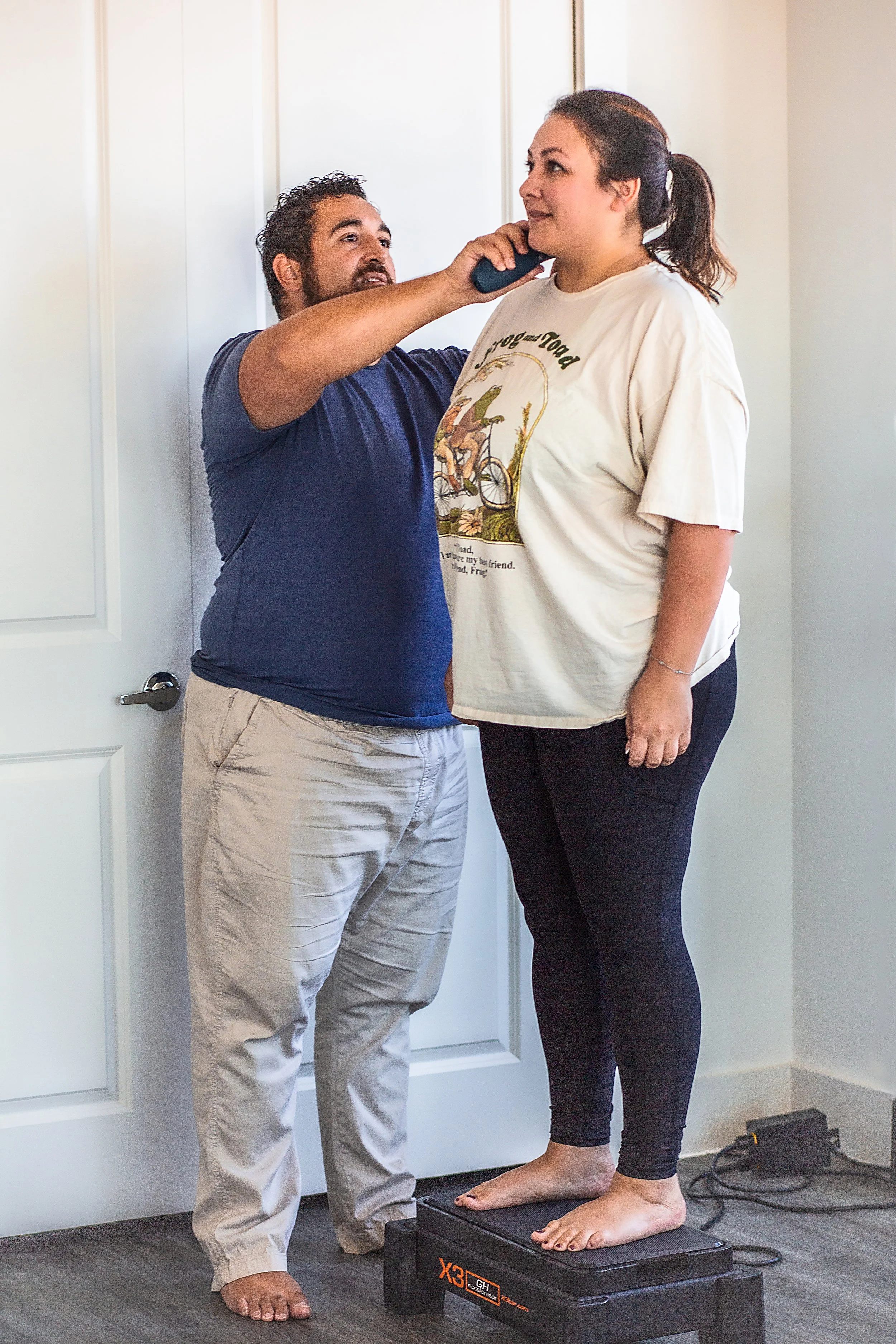
What we mean by TMJ vs. TMD
TMJ is the joint itself (the temporomandibular joint). TMD (temporomandibular joint dysfunction) is the pain, restriction, or dysfunction that shows up there. It can come from direct trauma to the joint, but far more often it is part of a larger pattern.
Common patterns we see:
Sacroiliac joint instability (very common after one or more pregnancies)
One side of the neck chronically tight while the other is softer
One shoulder sitting higher
Standing more on one leg than the other, with difficulty feeling balanced on both feet
Masseter and jaw muscle trigger points
History of dental work or functional mouth therapy with incomplete relief
These are classic Category 2 patterns in Sacral Occipital Technique—pelvic instability that shows up in the jaw and neck.
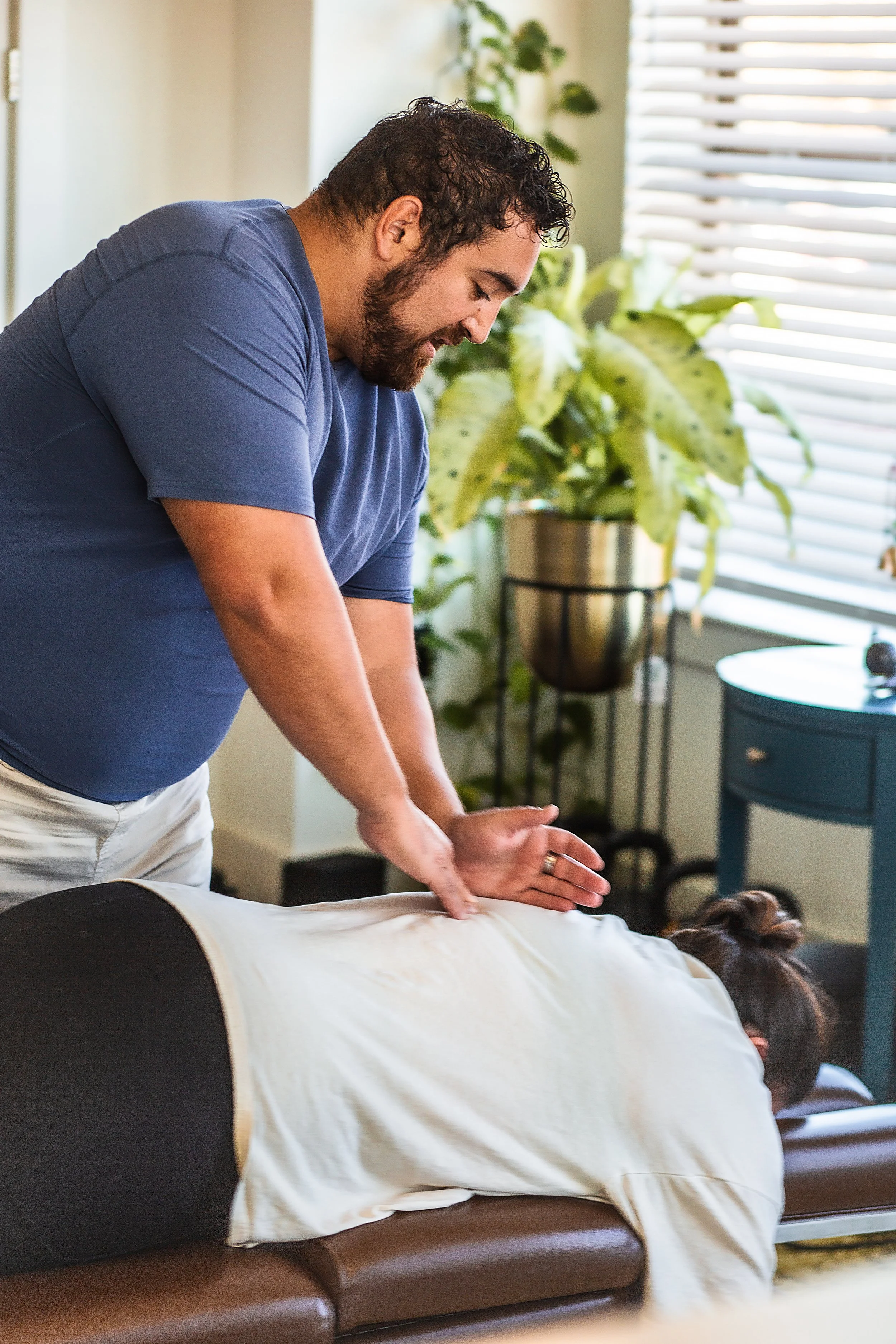
How we treat TMJ dysfunction at Frequency Chiropractic
We take a full-body approach. Stabilizing the pelvis usually comes first; then we address the jaw directly.
Pelvic and full-body work
Sacral Occipital Technique using pelvic blocks/wedges to balance the pelvis, address short-leg/long-leg discrepancies, and stabilize the SI joints
Gentle cranial, neck, and upper-back work to calm the compensatory patterns
Specific TMJ work
Intraoral myofascial release (gentle work inside the mouth on the muscles)
Soft mobilization of the mandible/jaw
A precise, gentle adjustment to the TMJ joint itself only when the case truly needs it
Most care is soft and gentle. We do not routinely do hard or aggressive jaw adjustments. If something more direct is indicated, we discuss it with you first.
What a typical course of care looks like
For the majority of people (about 90%), TMJ dysfunction resolves with a focused six-week course of care plus the right at-home exercises done consistently. Many people notice significant change in a handful of visits once the pelvis and jaw are both addressed.
A smaller group (roughly 10%) needs a more nuanced or longer plan. We identify that early and adjust accordingly.

Who this is specifically helpful for
Postpartum women (one or more pregnancies) with lingering pelvic instability and jaw pain
People who have tried night guards or dental/TMJ therapy with incomplete results
Those with one-sided neck tightness, uneven shoulders, or difficulty standing balanced
Anyone who prefers a gentle, full-body approach over force or only local jaw work
Patients who want care in the Central Austin / Brentwood office or via house call
Ready to address the real pattern?
If jaw pain, clenching, or TMJ dysfunction has been lingering despite other treatments, we can start with a free 15-minute consult or book an initial visit (office or house call).
Frequently Asked Questions
-
Not in most cases. The majority of TMJ symptoms resolve with pelvic stabilization, gentle mobilization, and intraoral myofascial release. An actual TMJ adjustment is only used when the joint itself needs it, and we discuss it with you first.
-
No. Almost all of the work is soft and gentle. If a more direct adjustment is ever warranted, we talk about it before doing anything.
-
Very often, yes—especially in postpartum women. Unstable sacroiliac joints create a pattern that travels upward and destabilizes the TMJ over time. Addressing the pelvis is a core part of care here.
-
Most people (about 90%) see resolution with a six-week course of care plus consistent at-home exercises. Some feel major relief in just a few visits; a smaller percentage need a more individualized plan.
-
It’s gentle myofascial release done inside the mouth on the muscles that attach to the jaw. It is not forceful and is done only when appropriate for your case.
-
That’s common. Many of our patients have tried dental appliances or mouth-focused therapy first. The difference here is treating the pelvic and full-body drivers that often keep the jaw unstable.
-
Yes. Specific at-home care makes a meaningful difference in how quickly and completely the symptoms resolve.
-
Yes. House calls are available for chronic pain care.
Office visits are in the Brentwood / Central Austin area.